Championing Health Equity: Alumna Marissa El Hage (BS ’22) Makes International Impact
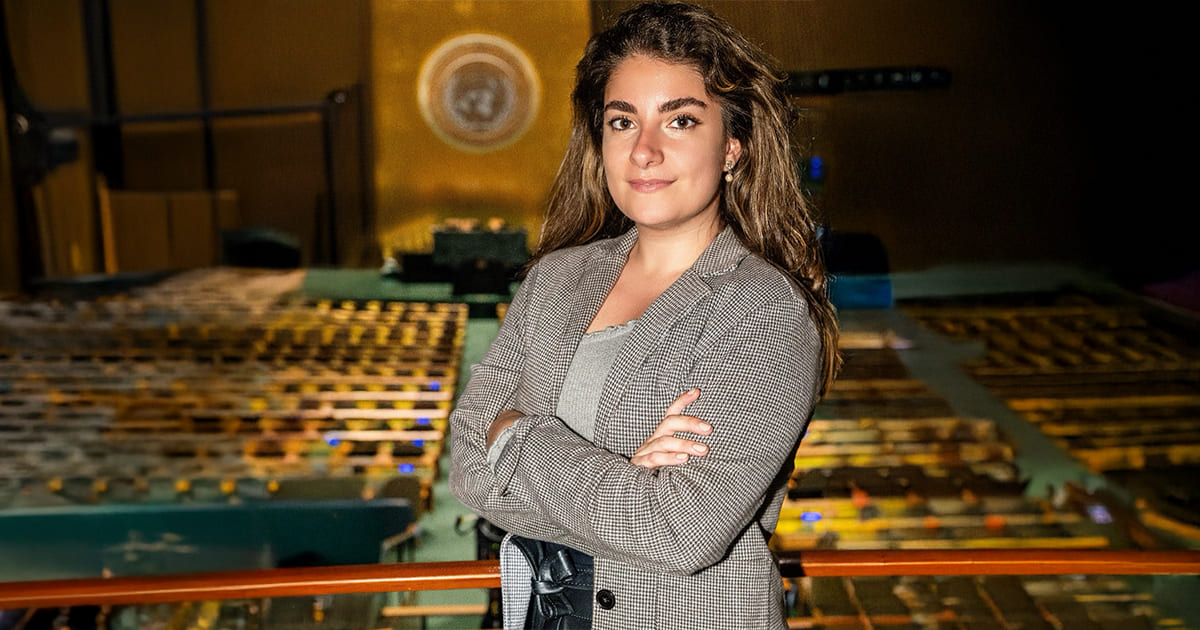
When Marissa El Hage graduated from LAU in 2022 with a Bachelor of Science in Pharmacy, she had already distinguished herself in research and leadership. As an undergraduate, she built a strong research record and received the Outreach Award at commencement for her extensive involvement in community engagement initiatives that advanced pharmacy awareness, outreach services and public health.
Today, she is pursuing a PhD in AI-driven drug discovery at the University of São Paulo, Brazil, focusing on cancer therapeutics, while simultaneously expanding her impact in global health policy and leading a nonprofit dedicated to improving access to essential medications in Lebanon, the Mariam Foundation.
Her commitment to research and advocacy has taken her across continents: She completed two research fellowships in Germany and Geneva, published studies on cannabinoid-based therapies and anticancer targets and earned international recognition, including the 2025 Global Pharmacy Award in Industrial Pharmacy and the UN Women in Biosecurity Fellowship.
A former chairperson of the International Pharmaceutical Students Federation’s Pan American Regional Office, a UN Youth Delegate, and founder of local NGO Mariam Foundation, El Hage continues to lead initiatives at the intersection of pharmaceutical innovation, diplomacy and equitable healthcare.
Below, she shares insights into her accomplishments, the obstacles she has navigated and the motivations guiding her contributions to science and global health.
How did your research interest develop at LAU, and what steps did you take to get involved in laboratory work?
Although pharmacy education is largely clinically focused, I was drawn early on to research. I wanted to acquire laboratory techniques firsthand and build strong research skills. During my pre-pharmacy years, I often researched my professors and their work online. Dr. Mohammad Mroueh’s studies on medicinal plants, particularly cannabis, immediately caught my attention, and I was determined to join his team. He was not accepting undergraduate students into his lab, but I persisted. For nearly a year, I stopped by his office regularly, summarized journal articles, and continued to ask for an opportunity to contribute. Many of those efforts went unanswered, but I was determined to prove my commitment.
Eventually, he offered me a place in his lab. That moment marked the start of my work in research.
By the time I graduated, I had already co-authored publications, which enabled me to go straight into a PhD. I had initially planned to pursue a PharmD, but Dr. Mroueh encouraged me to think beyond that trajectory, supported my decision to pursue a PhD, and wrote the recommendation letter that helped make it possible. He has had a profound influence on my career; I consider him an academic father.
Can you elaborate on the scope of your doctoral research and the path that led you to pursue it overseas?
My PhD centers on artificial intelligence in drug discovery within the broader field of cancer research. I design drug candidates from the ground up using computational methods, targeting a protein implicated in leukemia. Through artificial intelligence, we identify potential inhibitors and subsequently validate them in vitro. The work bridges computational modeling and experimental pharmacology, reflecting both innovation and translational purpose.
In 2022, during the crisis in Lebanon, I decided to continue my studies abroad. After researching several institutions, I settled on the University of São Paulo and contacted the program coordinator directly. Given my part-Brazilian background, Brazil was a natural choice for me both academically and personally. I completed a four-hour written exam, presented my research proposal, and was accepted. Within two weeks, I had booked my ticket and relocated to Brazil to begin my doctoral studies. I also integrated medicinal cannabis research into my thesis, building on the work I had started at LAU, where collaboration on this line of research continues.
How has your scientific expertise opened doors to global diplomacy and international policy, and what experiences have shaped your advocacy in biosecurity, drug policy reform and health equity?
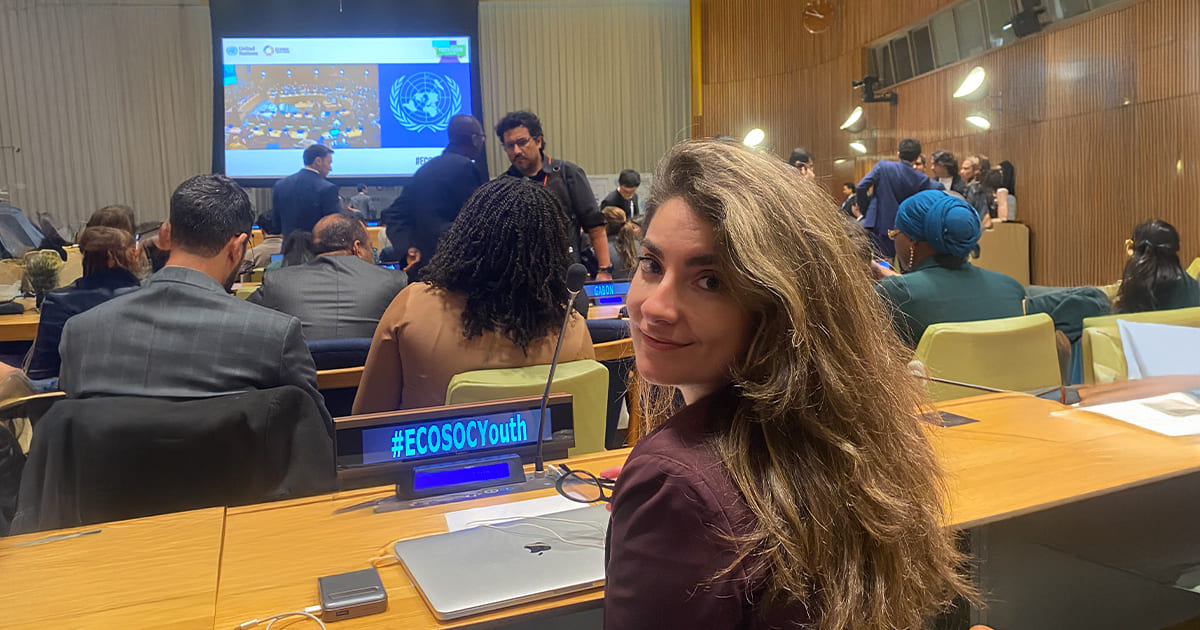
Education provides the foundation, but initiative creates opportunity. I learned from the beginning that you have to search for roles within global policy spaces. For example, last year, I applied to the ECOSOC Youth Forum and was selected among thousands of applicants as a UN Youth Delegate.
That experience was a turning point. I began to understand advocacy as a natural extension of my research rather than a separate pursuit. My background in artificial intelligence and drug discovery positioned me to contribute meaningfully to discussions on biosecurity and drug policy reform. I participated in high-level dialogues examining both the promise of artificial intelligence and its potential biosecurity risks. Building on those engagements, I delivered a statement at the World Health Assembly on the global threat of falsified medical products—an issue that directly affects patient safety and public trust.
These international platforms deepened my interest in the intersection of science and governance. Through the Women in Biosecurity Fellowship in 2025, I joined policy meetings in Geneva and contributed to drafting recommendations. Observing how data and laboratory findings are translated into global frameworks reinforced my belief that researchers have a responsibility beyond publication—that of shaping policy.
Ultimately, however, my advocacy returns to one central principle: Health equity. While global forums facilitate dialogue, meaningful change must also occur at the community level. In 2023, we founded the Mariam Foundation to support individuals in Lebanon who lack access to essential medications. The initiative connects Lebanese pharmacists and researchers across countries to secure treatments at no cost, follow up with patients monthly, and coordinate with NGOs and medical centers. For me, advocacy is most powerful when it integrates international policy with local impact, grounded in the conviction that healthcare access should be universal, not conditional.
What responsibility, in your opinion, do pharmacists have during crises?
Pharmacists need to be prepared for crisis response. In Lebanon, we often see people supporting each other more than institutional systems. Pharmacists should not only focus on the business side of the profession. They need to be humanitarian, involved in NGOs, and active in coordinating medication access. Even if someone cannot donate money, they can donate time and effort.
How are you connecting research and industry?
I recently started working with the Pan American regional office of the World Health Organization (PAHO/WHO) as a consultant/researcher intern in the Health Emergencies Department. In parallel, I am working as a pharmaceutical consultant across different countries in the region. I want to explore market access and business development while continuing my research. I will not leave research, but I also want to understand the business side of pharma. Drug discovery and repurposing are part of a larger industrial ecosystem.
What advice would you give to current LAU students?
Think outside the box and build meaningful connections. Rejection is part of the process. I applied unsuccessfully to various opportunities before being finally accepted. If you believe in what you are doing, keep trying and don’t give up.